
Smart Home Planning · September 4, 2019
Music in every room, and different music in each
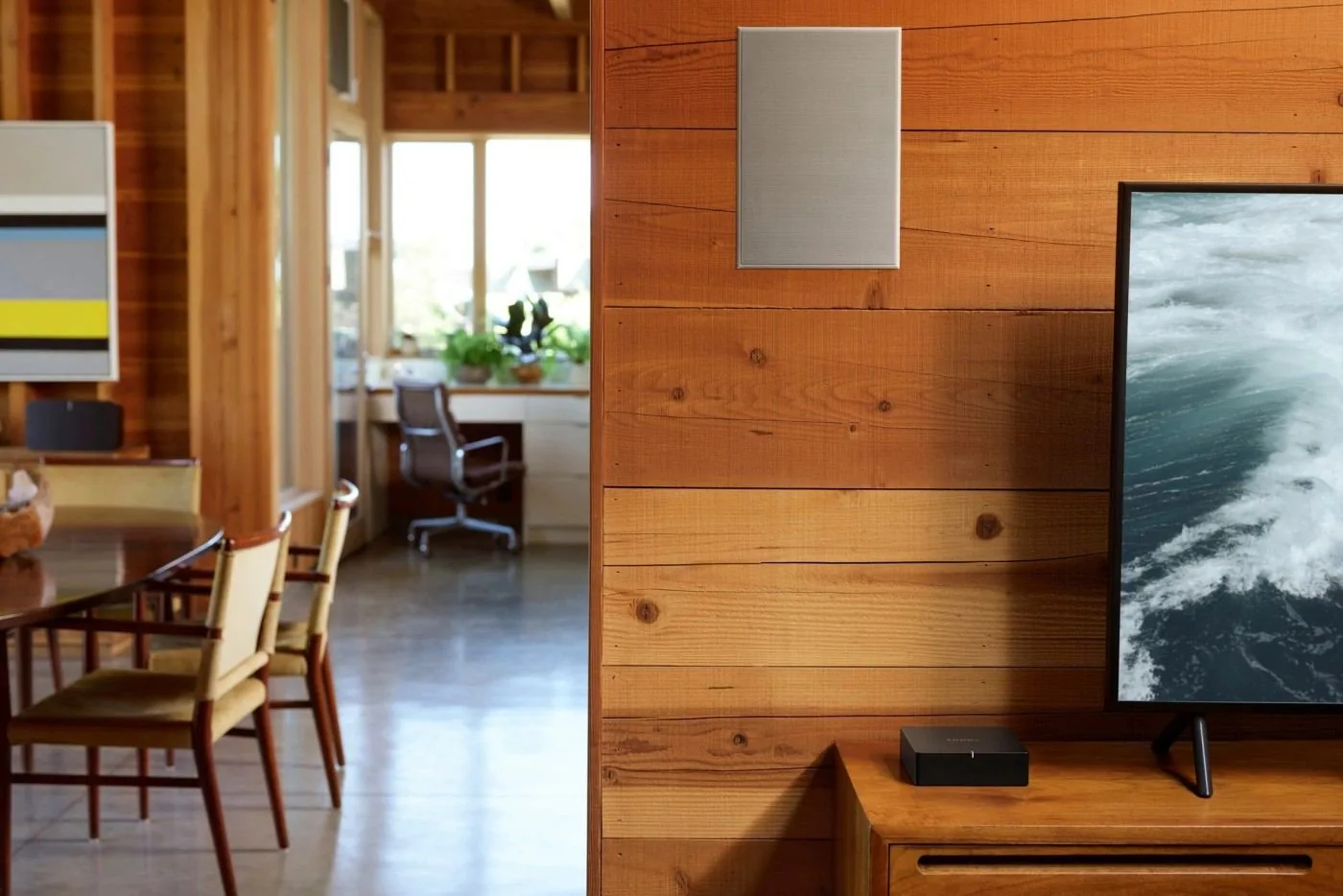
The point of multi-room audio is not that music can be loud everywhere. It is that different rooms can be doing different things, something upbeat in the kitchen while somebody works in a bedroom, controlled from a phone, a keypad, a remote or by voice, whichever is nearest.
That extends outdoors. Music by the pool, or the game playing across the garden, without the whole house having to listen to it. Each zone is independent, which is the entire difference between a system and a loud speaker.
Everyone's own services work across it: Pandora, Spotify, TIDAL and the rest run through the same control system, so nobody has to learn a new app to play their own music.
On the hardware, it depends what the room can take. In-wall and in-ceiling speakers disappear entirely; where a room can carry them, visible speakers can be the thing you look at. Either way the aim is that recordings sound the way they were meant to, in rooms that were not built for it.
Where it gets genuinely useful is when audio joins the rest of the system. A scene called Relax that dims the lights, lowers the shades and starts something quiet is three systems responding to one press, and it is the kind of thing people actually use every day, rather than the feature that impresses once.
Start a project
Tell us about the space. We'll come out and give you a straightforward plan.
The consultation is complimentary and it starts with a walkthrough or a set of drawings. You will leave it knowing what is realistic in your house, what it costs, and what can wait until phase two.