
Landscape Lighting · Westchester & Fairfield County
After dark, the property does not disappear.
Most of the year you come home in the dark. Done properly, the house and the garden are still there when you do.
Lighting a property so it still looks like itself.
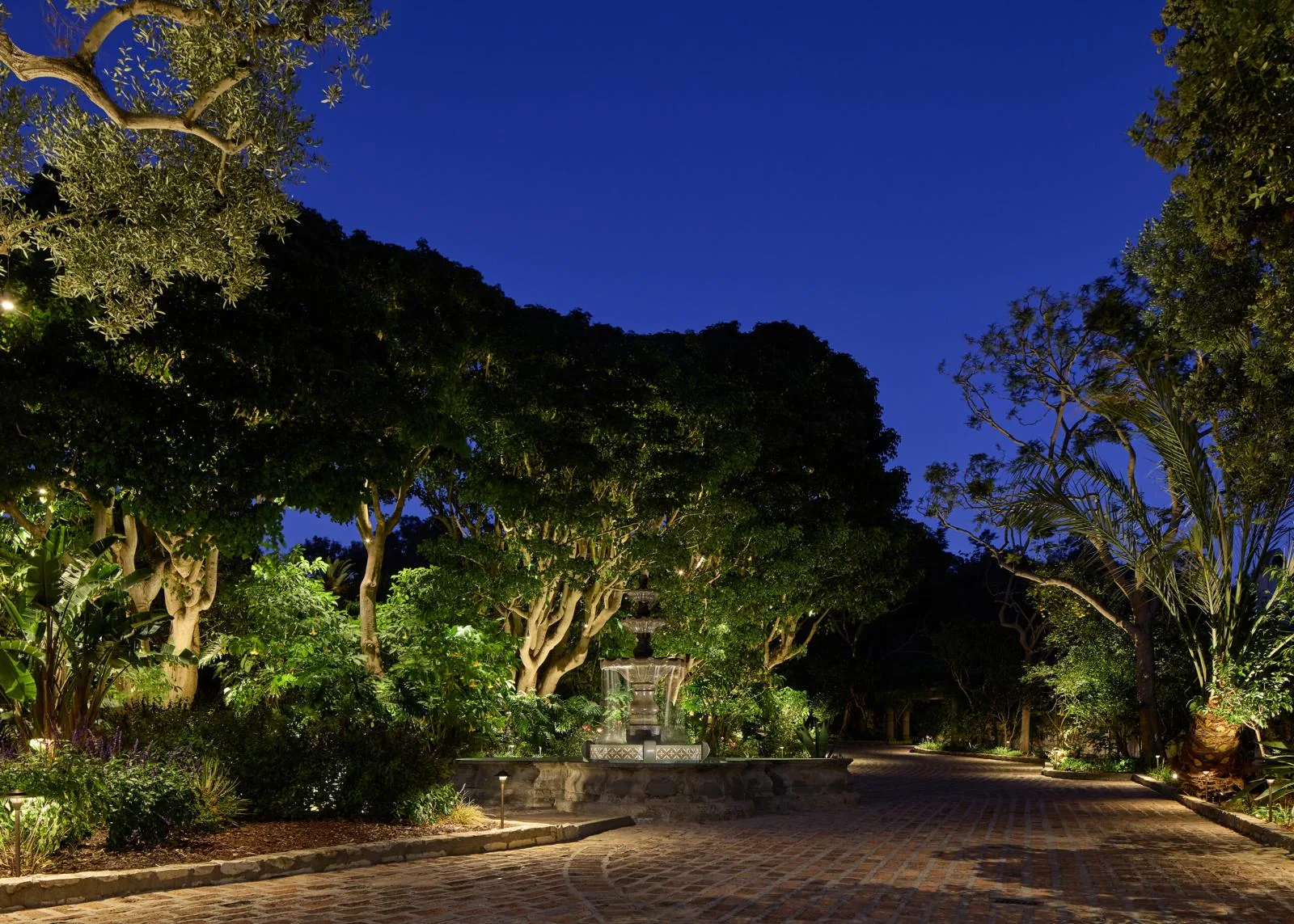
Good landscape lighting is mostly restraint. The instinct is to light everything, and the result is a runway. We work in layers instead: enough on the steps and the change in grade that nobody is feeling for the edge, a wash on the facade so the house has a shape, and two or three specimen trees lit from below because a mature oak is the best thing on most of these properties. Everything else stays dark on purpose. The dark is what makes the lit parts read.
The part that decides whether it still works in five years is underground. Low-voltage runs are fine; the failure is almost always a connection. Wire nuts and tape buried in a Westchester winter corrode, and then a zone goes out every spring and somebody digs to find it. We use sealed connector systems: Coastal Source is the one we specify for this, with brass and copper fixtures rather than aluminium, because aluminium near road salt and irrigation does not last and cannot be brought back.
Colour temperature is the giveaway between a considered job and a cheap one. Fixtures at different temperatures make a garden look patched, so we hold the whole property at one warm temperature and keep it there when lamps are replaced. The lighting runs on an astronomic clock, so it follows sunset through the year instead of switching at a fixed time and being wrong by six weeks in either direction. If the house has lighting control, the outside joins the same evening scenes and the whole property settles at once.
The range is wider than people expect from a line known for toughness. Uplights for the trees and the facade, downlights hung in the canopy for the moonlight effect, path and area lights where feet go, hardscape lights tucked under a wall cap, wall wash for the stone, and in-grade lights set flush in a terrace or a step. All of it on the same Plug+Play cable and the same sealed connectors, so a fixture can be added or moved years later without digging up the run. Where a property wants more than warm white, VIA puts Lutron's Ketra technology outdoors: tunable white, colour where you want it, and native control from the same Lutron keypads as the house.
How we work
- 01
Walk it at dusk
With you, when the property is actually dark. Which trees, which approach, where the steps are, what the neighbours can see.
- 02
Plan on the landscape drawing
Fixture by fixture, with the beam angles and the cable runs marked, shared with your landscaper so trenching happens before planting.
- 03
Rough in while the ground is open
Cable, sleeves under paths and drives, and the transformer location. Doing this through finished beds is the expensive version.
- 04
Set and aim
Fixtures placed and aimed at night by our own crew, then adjusted after the first season of growth, because the garden moves.
- 05
Tie it into the house
Astronomic schedule, the Evening and Away scenes, and the bedside keypad that brings the whole exterior to full. Then tuned on a service plan.
Lighting outside, controlled inside
The garden is on the same keypad as the kitchen.
Coastal Source's VIA fixtures carry Lutron's Ketra technology, which means the exterior speaks the same language as the dimmers in the house. Tunable white that warms as the evening goes on, colour for the one night a year you want it, and all of it on the Evening scene with the music and the shades.
- Native Lutron control, no bridge in between
- Tunable white and colour from brass fixtures built for weather
- Evening, Dinner and Away scenes that include the exterior
- EVO fixtures for the designer who wants to tune every beam
Your house
Wondering what landscape lighting would look like, and cost, in your house?
Tell us about the room or the whole house and we will come and look. The calculator gives a planning range before you talk to anyone.
At a glance
Sealed connections
Coastal Source's Plug+Play cable and IP68 connectors, so the joint under the mulch is the one part of the job that never comes back to haunt anyone.
Brass and copper
Fixtures that take a Westchester winter and salt air off the Sound without going white, pitting or seizing. Painted aluminium does not.
Six kinds of fixture
Up, down, path and area, hardscape and wall, wall wash, in-grade and well. Each does one job, and a good plan uses four or five of them.
One colour temperature
Held across the whole property and kept when a lamp is replaced, so the garden reads as one thing rather than a patchwork.
VIA, with Lutron inside
Coastal Source fixtures running Lutron Ketra technology: tunable white, colour for the evenings that want it, and the same keypad as the living room.
On the astronomic clock
Follows sunset through the year and sits inside the house's Evening and Away scenes, so nobody is switching anything on.
With Coastal Source
Six kinds of fixture, one buried system.
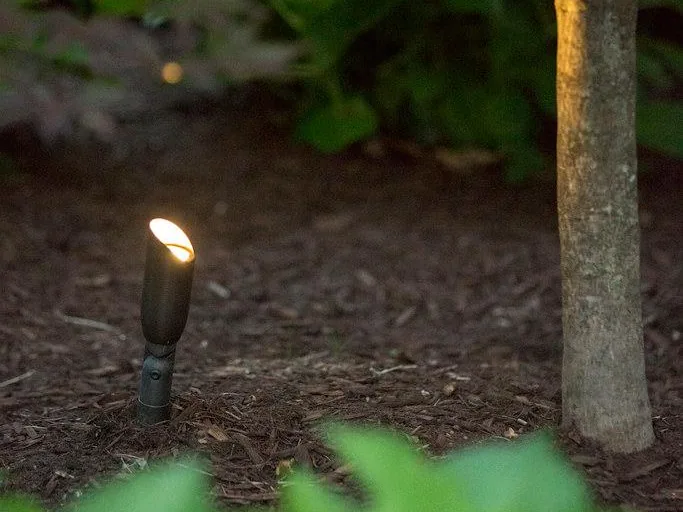
Uplights
For the trees, the facade and anything with height. A mature oak lit from below is the best thing on most of these properties, and this is the fixture that does it.
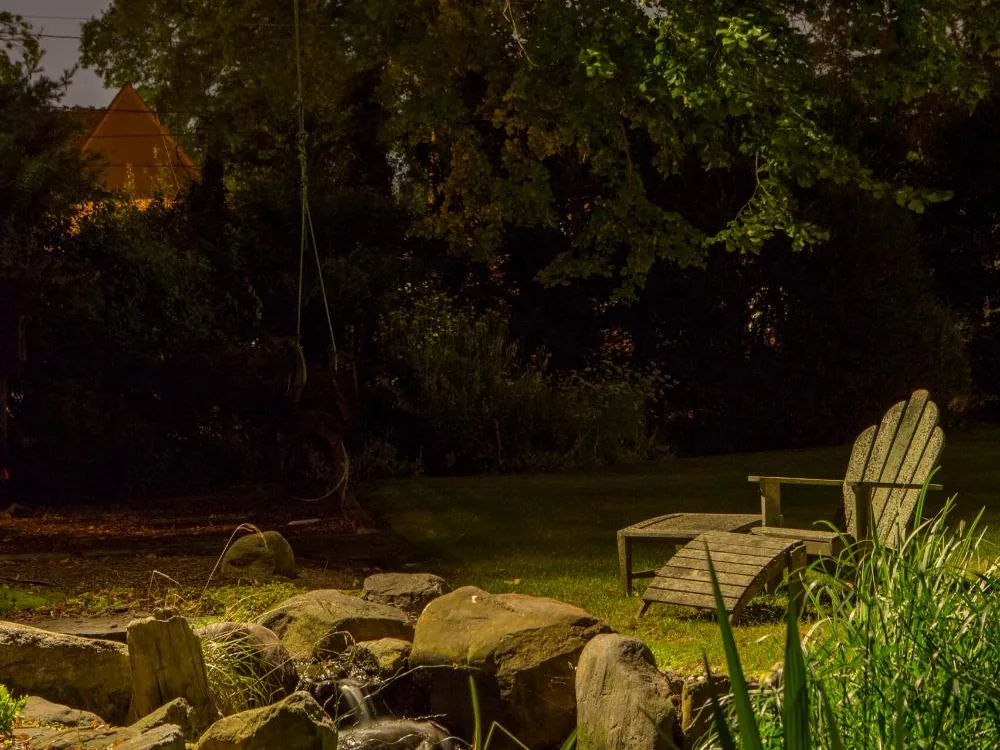
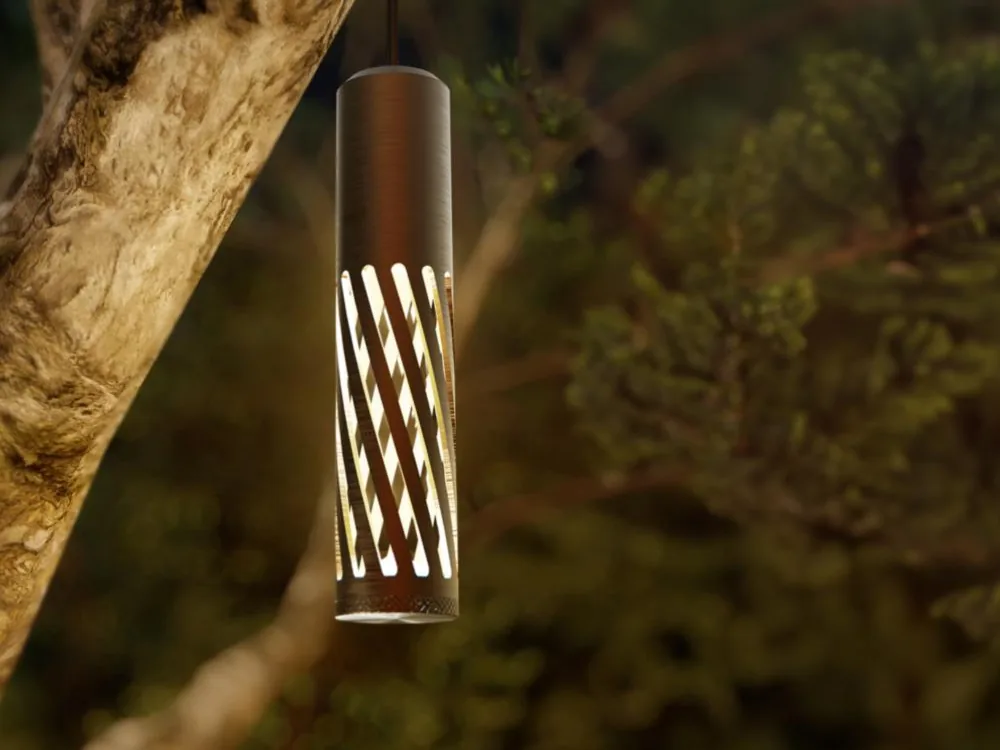
Downlights
Hung in the canopy or mounted high, so light falls through the branches the way moonlight does. The same fixture gives a fire pit or a lawn enough to use after dark.
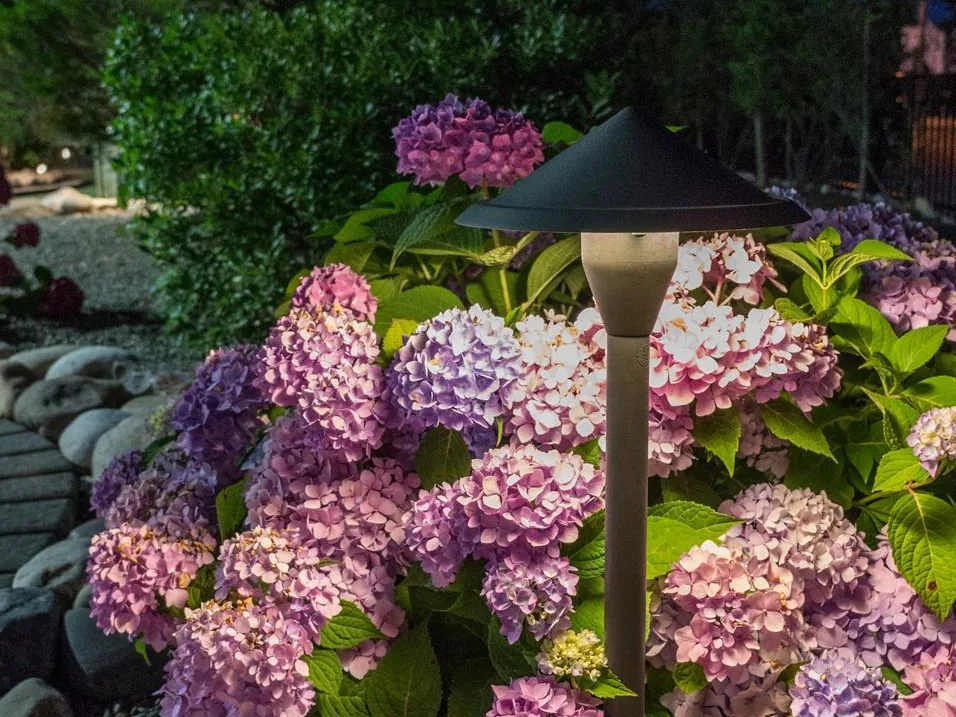
Path and area lights
Where feet go: the walk from the drive, the steps to the pool, the edge of a terrace. Enough to see by, low enough not to glare, and spaced so it does not read as a runway.
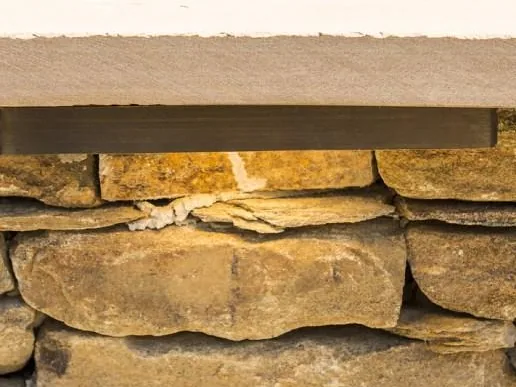
Hardscape and wall lights
Tucked under a wall cap or a step, lighting the stone from a few inches away. The fixture disappears and the masonry does the work.
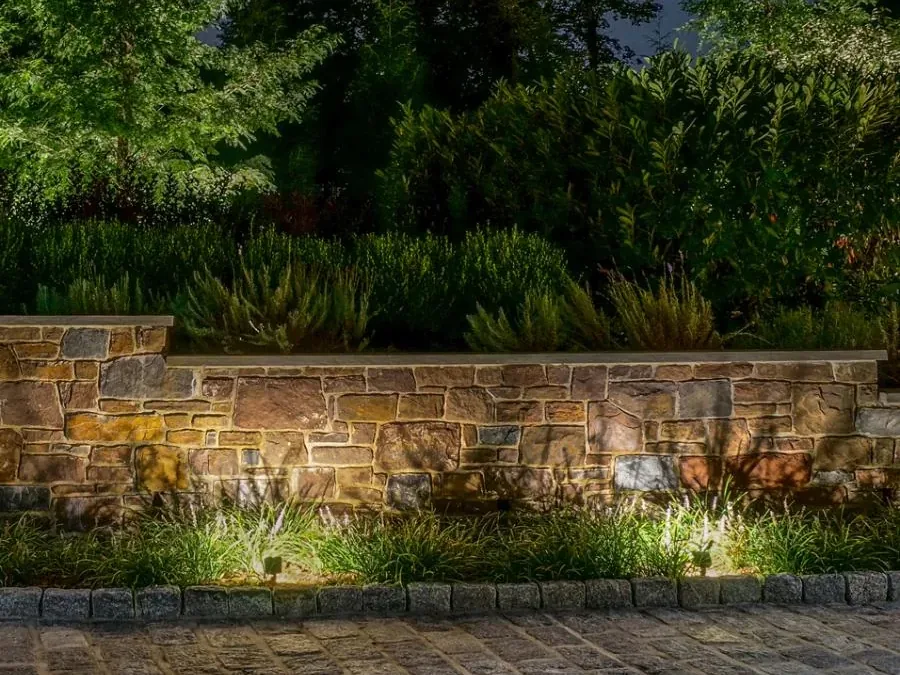
Wall wash
A soft, even wash across a stone wall, a chimney or the back of the house, so the property has a shape after dark rather than a row of bright spots.
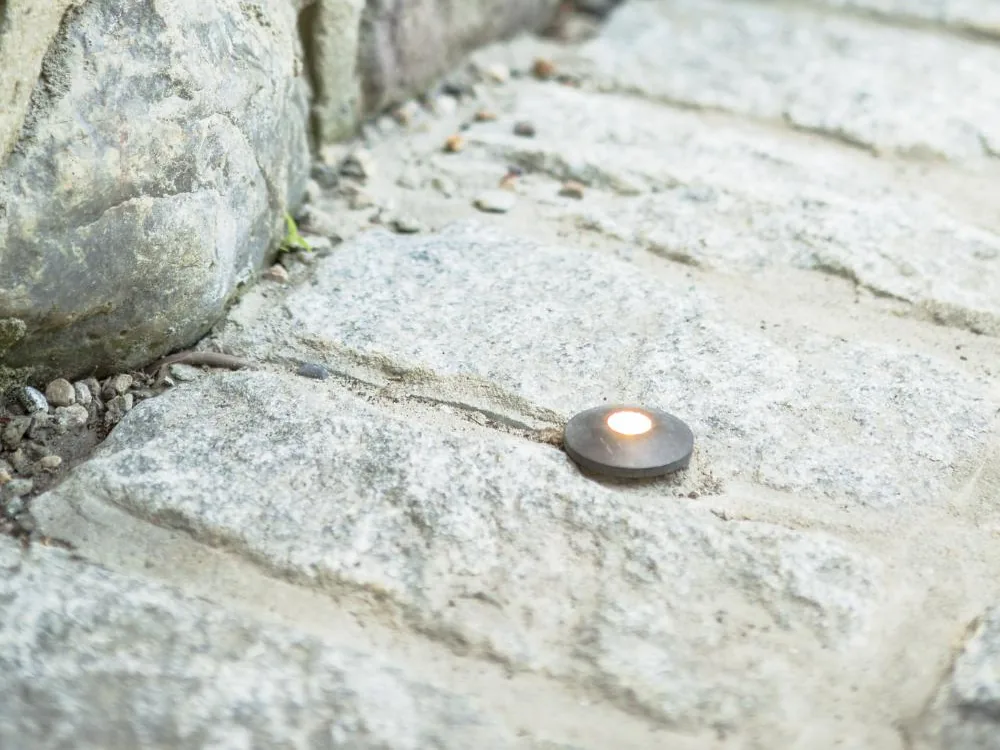
In-grade and well lights
Set flush in a terrace, a step or a drive. Nothing to trip on, nothing to see in daylight, and at night a column or a specimen tree lit from the ground.
Common questions
What people ask us about landscape lighting.
- When should landscape lighting be planned?
- Before the planting, if there is any choice. Sleeving and trenching in bare ground is straightforward; doing it through an established bed means lifting plants and paying for the same work twice. If the garden is already in, it can still be done. It is just slower and more careful.
- Will it survive the winter here?
- The fixtures will if they are brass or copper. What fails is the connections. Buried wire nuts corrode through a few freeze cycles and road salt, and the symptom is a zone that drops out each spring. Sealed connector systems are the whole difference, and they are most of the reason a proper job costs what it does.
- How much of the property should be lit?
- Less than people expect. Steps and grade changes for safety, the facade so the house reads, and a few trees. Lighting everything flattens a garden and annoys the neighbours. The unlit parts are doing as much work as the lit ones.
- Can it be on the same system as the house?
- Yes, and it is better that way. On its own timer it becomes another thing to adjust twice a year. Tied into the house it joins the evening scene, goes to a low level overnight, and comes back up when somebody turns into the driveway.
- What about the lights I already have?
- We will reuse anything worth reusing and say plainly what is not. Aluminium fixtures that have already corroded are not worth reinstalling, and mixing colour temperatures undoes the look, so partial upgrades need a plan rather than a patch.
- Do you work with our landscaper?
- Yes. It is the sensible order: landscape design, then lighting layout, then planting. We would rather sit in on that conversation early than arrive afterwards and cut through finished work.
- Can outdoor lighting change colour, or is it all warm white?
- Most of a property should stay at one warm white, and we will say so. Where a house wants more, Coastal Source's VIA fixtures run Lutron's Ketra technology outdoors: tunable white that warms through the evening, and colour for the few nights a year it is wanted, from the same Lutron keypads as the rest of the house. It is a considered addition to a plan, not the plan.
Afterwards
Looked after by the people who installed it.
Our own crew does the work, so the number you call afterwards is the same one you called at the start. Equipment carries its manufacturer's warranty and we handle those claims rather than handing you a phone number. A service plan adds monitoring, next-business-day response and scheduled visits on top.
Also consider
Start a project
Tell us about the space. We'll come out and give you a straightforward plan.
The consultation is complimentary and it starts with a walkthrough or a set of drawings. You will leave it knowing what is realistic in your house, what it costs, and what can wait until phase two.