
Trade · March 15, 2019
Technology that disappears into the room
Clients increasingly want both a clean interior and a fully capable system, and the two are usually presented as a trade-off. They are not, provided the concealment is decided early rather than solved afterwards.
Screens are the obvious offender. A television is a black rectangle for most of the hours it exists in a room. Mirror finishes, art frames and Samsung's Frame range all address the same problem differently, giving the panel something to be when it is not being a panel.
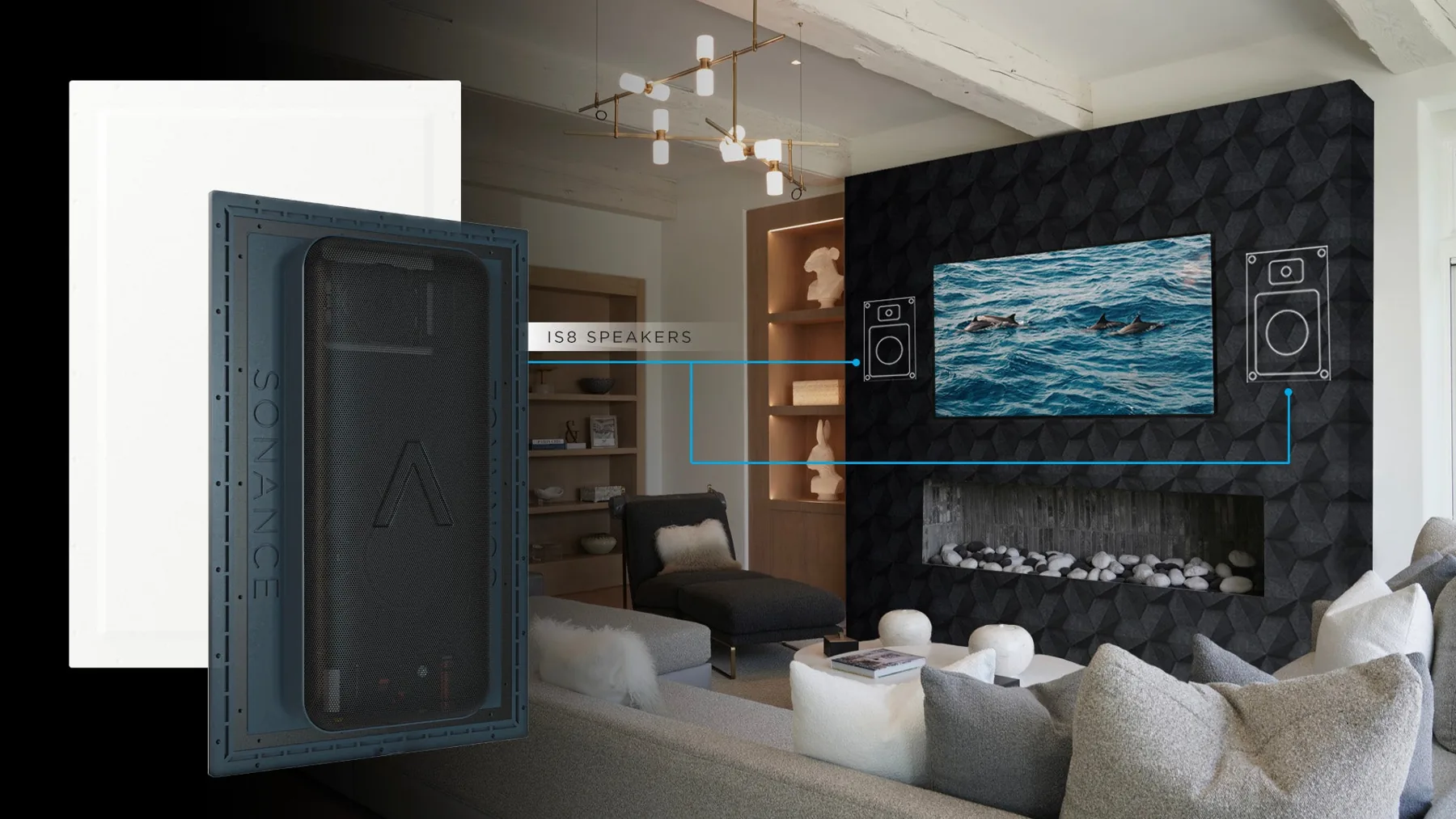
Speakers have more options than people expect. Bookshelf and cabinet units fit into joinery. In-ceiling and in-wall units leave only a small cover. Invisible units plaster in flush and leave nothing at all. The performance ladder is real, but so is the fact that every rung is quieter visually than a box on a stand.
Shading is where design and function meet most directly. Fabric choice is enormous, and dual shades solve the blackout problem properly: a sheer that suits the room stays down day to day, and the blackout layer only appears when a film starts or somebody wants to sleep.
Lighting control does the same work in reverse. It is the layer that makes everything else in the room look considered. Sconces and spots pick out art and objects; landscape lighting improves how the building reads from outside after dark and adds a security benefit almost incidentally.
Start a project
Tell us about the space. We'll come out and give you a straightforward plan.
The consultation is complimentary and it starts with a walkthrough or a set of drawings. You will leave it knowing what is realistic in your house, what it costs, and what can wait until phase two.